

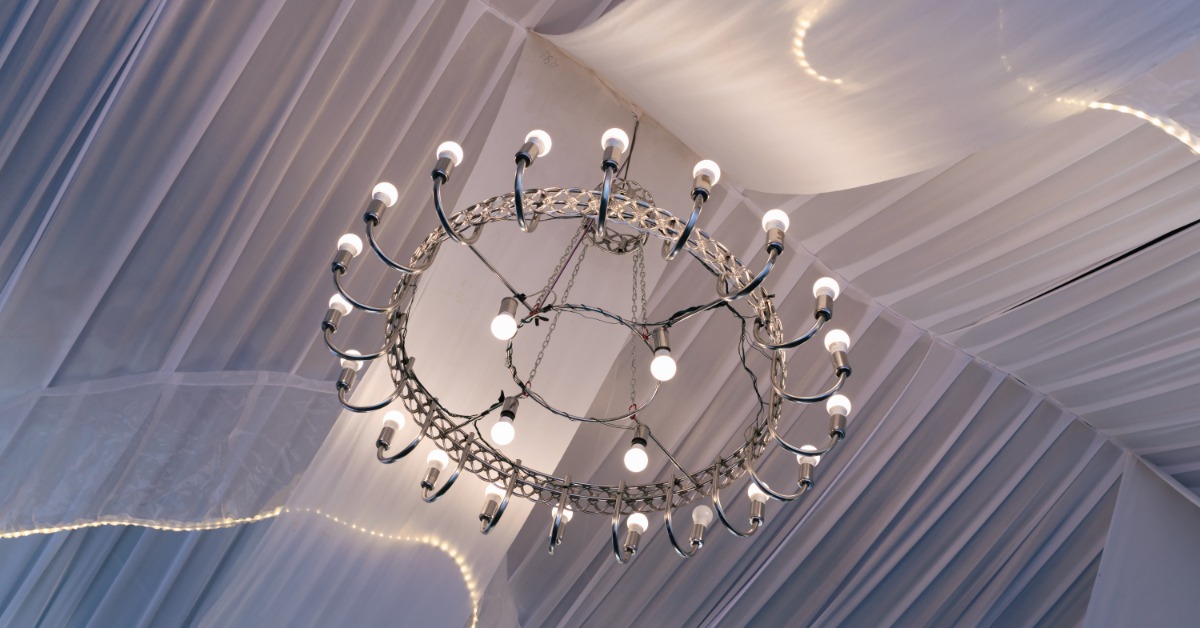
Ceiling drapery can turn a plain ballroom, gym, banquet hall, or event space into a breathtaking venue. There are many ways to improve ceiling drapery safety that prioritize suitable materials and respect for the venue itself. Before your next event takes shape, explore dependable pipe and drape products to help create a polished indoor setup from floor level up.
#1 Take a Close Look at the Venue
A beautiful ceiling concept has to fit the room rather than force the room to fit the concept. Before fabric goes up, review ceiling height, room dimensions, and permanent fixtures. Obstacles you may encounter include exits, sprinklers, lights, HVAC components, and any other overhead equipment. A clear view of these details helps the décor team identify areas that need extra clearance or a different design.
Venue rules deserve the same attention. Some facilities restrict attachment points or décor near certain building systems. Ask the venue or a qualified site representative about its requirements before installation begins. This early conversation can prevent last-minute revisions after the crew has already arrived. Once you know more about the venue layout you’re working with, you can browse pipe and drape wholesale and get the supplies you need to start safely decorating.
#2 Use Approved Attachment Points
A convenient ceiling feature isn’t automatically a safe attachment point. Decorative trim, pipes, light fixtures, ceiling grids, and other structural elements may look sturdy but may not support added loads. Drapery should only connect to attachment points that the venue has approved for the intended purpose.
The weight of the fabric itself also deserves consideration. A broad span of material can place more force on attachment hardware than its soft appearance suggests. Hardware, support points, and suspension methods should suit the planned load and comply with venue requirements. For complex overhead installations, rely on qualified professionals who understand rigging and the specific site.
#3 Choose Drapery With Safety in Mind
Fabric selection affects far more than the visual mood of an event. Drapes used in public venues may need to meet applicable fire or flame-resistance requirements under local rules, venue policies, or event requirements. Confirm the necessary standards with the venue or local authority rather than assume that any decorative fabric is suitable.
Documentation can also save time. If a venue asks for information about the drapery, having relevant product details available can prevent a scramble before setup. Requirements can vary by location and event type, so verify them before the installation date. A stunning ceiling treatment still needs practical judgment behind it. The best fabric for a photo backdrop isn’t automatically the best choice for a large overhead span.
#4 Keep Drapery Clear of Building Systems
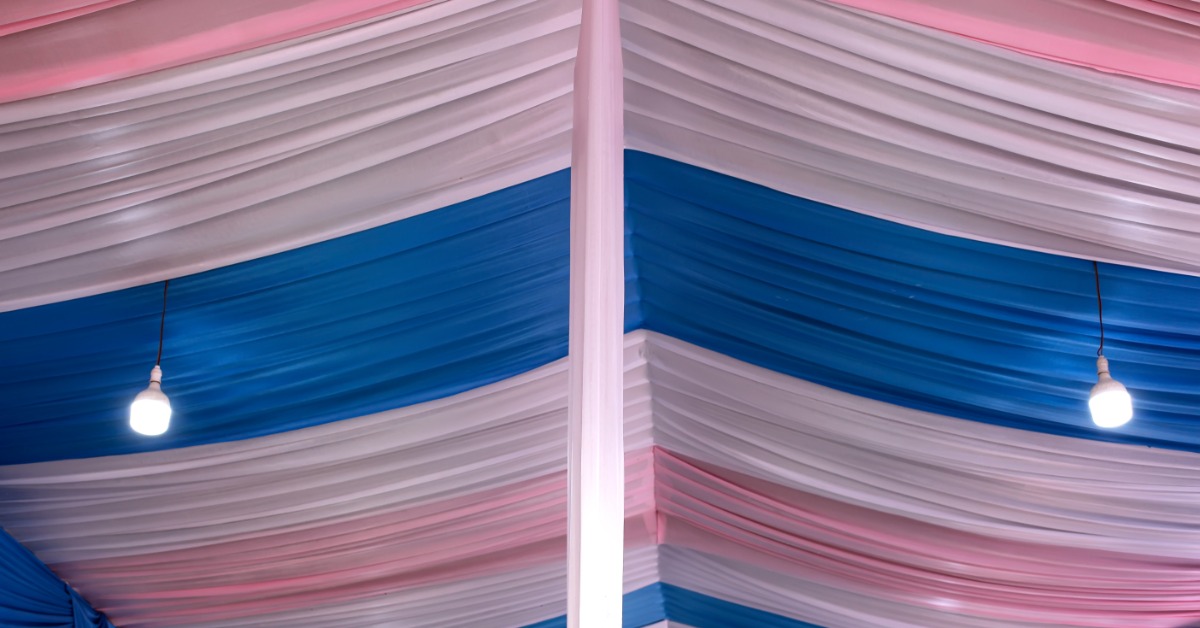
Ceilings contain more than decorative opportunities. Sprinklers, smoke detectors, exit signs, vents, speakers, cameras, lights, and other systems may all occupy the same space as a proposed drapery layout. Fabric shouldn’t block or compromise equipment that serves the venue.
Clearance requirements can differ from one facility to another. Instead of relying on a general rule from a previous event, confirm the requirements for the actual site. A layout that worked beautifully in one ballroom may need several adjustments in another.
This approach also protects the design itself. Fabric too close to vents can shift, billow, or move out of its intended position once the HVAC system starts. A little extra planning before installation helps the finished ceiling stay neat and controlled throughout the event.
#5 Account for Fabric Tension and Weight
Another easy way to improve ceiling drapery safety is to pay special attention to fabric setup.Ceiling drapery can look airy, but gravity never takes the night off. Long spans, dense fabric, elaborate swags, and multiple layers can add substantial weight to an overhead display. Every attachment point and support component needs to suit the load it will carry.
Avoid the temptation to pull fabric tighter just to erase every fold. Excess tension can place added force on hardware and attachment points. A graceful drape usually benefits from deliberate softness anyway, so the visual design and practical setup can work together. Fabric weight can also affect the number and placement of support points. A professional installer or qualified rigger can evaluate more complex arrangements and determine an appropriate setup for the venue.
#6 Keep Floor-Level Equipment Stable
Not every dramatic ceiling treatment attaches directly to the ceiling. Some event designs use freestanding structures or pipe and drape elements as part of the visual layout. In those cases, stability at floor level deserves close attention too.
Bases should sit on firm, level indoor surfaces and remain clear of guest traffic where possible. Components should fit together as intended, and crews should avoid improvised extensions or attachments that fall outside the product’s intended use.
Guest flow also matters. Keep support equipment away from aisles, exits, and high-traffic paths. If guests, carts, or event staff can bump a support structure repeatedly, revise the layout before doors open.
#7 Plan Safe Access for the Installation Crew
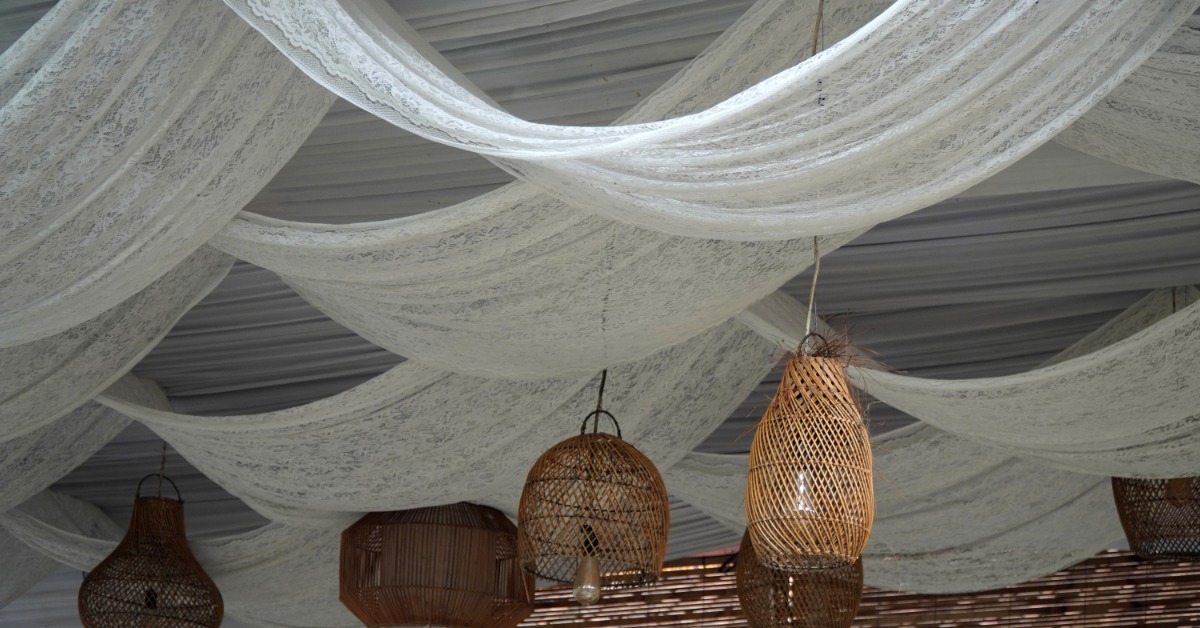
High ceilings introduce another concern, which is access. Ladders, lifts, scaffolds, and similar equipment require suitable conditions and proper use by trained or authorized personnel. A rushed crew with inadequate access equipment can turn an elegant décor plan into an unnecessary hazard.
Give installers enough room to work without tables, chairs, floral displays, boxes, or audiovisual equipment packed beneath them. Coordinate the setup schedule so overhead décor can go into place before the room becomes crowded with other event elements.
Crew communication helps as well. Everyone should understand the installation plan, work area, and individual responsibilities before work starts. A calm, organized setup beats a frantic race against the event clock.
#8 Avoid Last-Minute Additions
Event décor has a funny habit of expanding after everyone sees the finished room. Someone wants one more swag over the dance floor, another panel near the stage, or extra fabric above the entrance. Those additions may look minor, but they can alter weight and support demands.
Treat each new overhead element as part of the original installation rather than a casual decorative extra. Review its attachment method, position, and effect on the rest of the setup. If there isn’t enough time to assess the addition properly, leave it out. A refined event doesn’t need every available inch of ceiling covered. Thoughtful restraint can create a more sophisticated result anyway.
Safety and style don’t have to compete for attention. Careful placement can create dramatic swags, elegant focal points, and amazing transformations without careless shortcuts. The strongest event designs respect the architecture of the room and use décor to complement it. Get the stunning ceiling drape kits you need to decorate, and start building a smart, safe strategy for your event.
